Understanding reverse mortgage heirs options helps homeowners and their families know what happens to the loan when the borrower moves or passes away. Understanding reverse mortgage heirs’ options ahead of time takes a lot of worry out of the decision, and it helps adult children know what to expect.
When the loan comes due
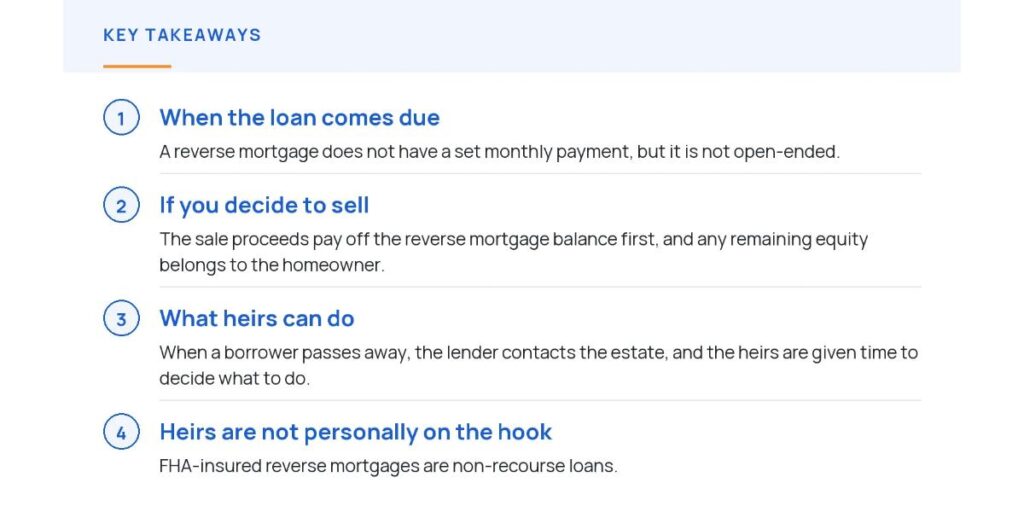
A reverse mortgage does not have a set monthly payment, but it is not open-ended. The loan generally becomes due when the last borrower no longer lives in the home as a primary residence. That can happen if the borrower sells, moves out permanently, such as to a long-term care facility, or passes away. It can also come due if the homeowner stops paying property taxes or homeowners insurance, or lets the home fall into disrepair.
If you decide to sell
Selling is the simplest path. The sale proceeds pay off the reverse mortgage balance first, and any remaining equity belongs to the homeowner. Because the balance grows over time, the amount left over depends on how long the loan has been in place, how much was borrowed, and what the home sells for.
What Reverse Mortgage Heirs Options Allow
When a borrower passes away, the lender contacts the estate, and the heirs are given time to decide what to do. They generally have three choices. They can sell the home and keep any money left after the loan is repaid. They can keep the home by paying off the loan, often with a new mortgage. Or they can hand the home over to the lender.
Heirs are not personally on the hook
FHA-insured reverse mortgages are non-recourse loans. In general, that means the borrower or heirs will not owe more than the home is worth, even if the loan balance ends up higher than the value of the property. The rest of the family’s assets are not at risk. Your loan officer can explain exactly how this applies to the loan you are considering.
If there is a spouse who is not a borrower
This is an area where planning matters. A spouse who is not listed as a borrower may be able to stay in the home after the borrower passes away, but only if certain requirements are met and the paperwork was set up correctly at the start. The simplest way to avoid problems is to include both spouses on the loan whenever they are eligible.
Talk with your family early
Many reverse mortgage headaches come from surprise, not from the loan itself. Sharing the details with your children or whoever will handle your estate means they will know who to call, where the documents are, and what the options are. Families who have the conversation early usually feel a lot more comfortable with the loan.
Questions about your situation
Eric Steenstra of New American Funding in Hyannis is happy to sit down with homeowners and their families to go over how a reverse mortgage would work for heirs and spouses in Massachusetts. Call (508) 685-2716 or visit teamsteenstra.com to discuss reverse mortgage heirs options with no pressure. Eric Steenstra, NMLS #21548. New American Funding, NMLS #6606. All loans subject to credit approval and underwriting. Equal Housing Opportunity.